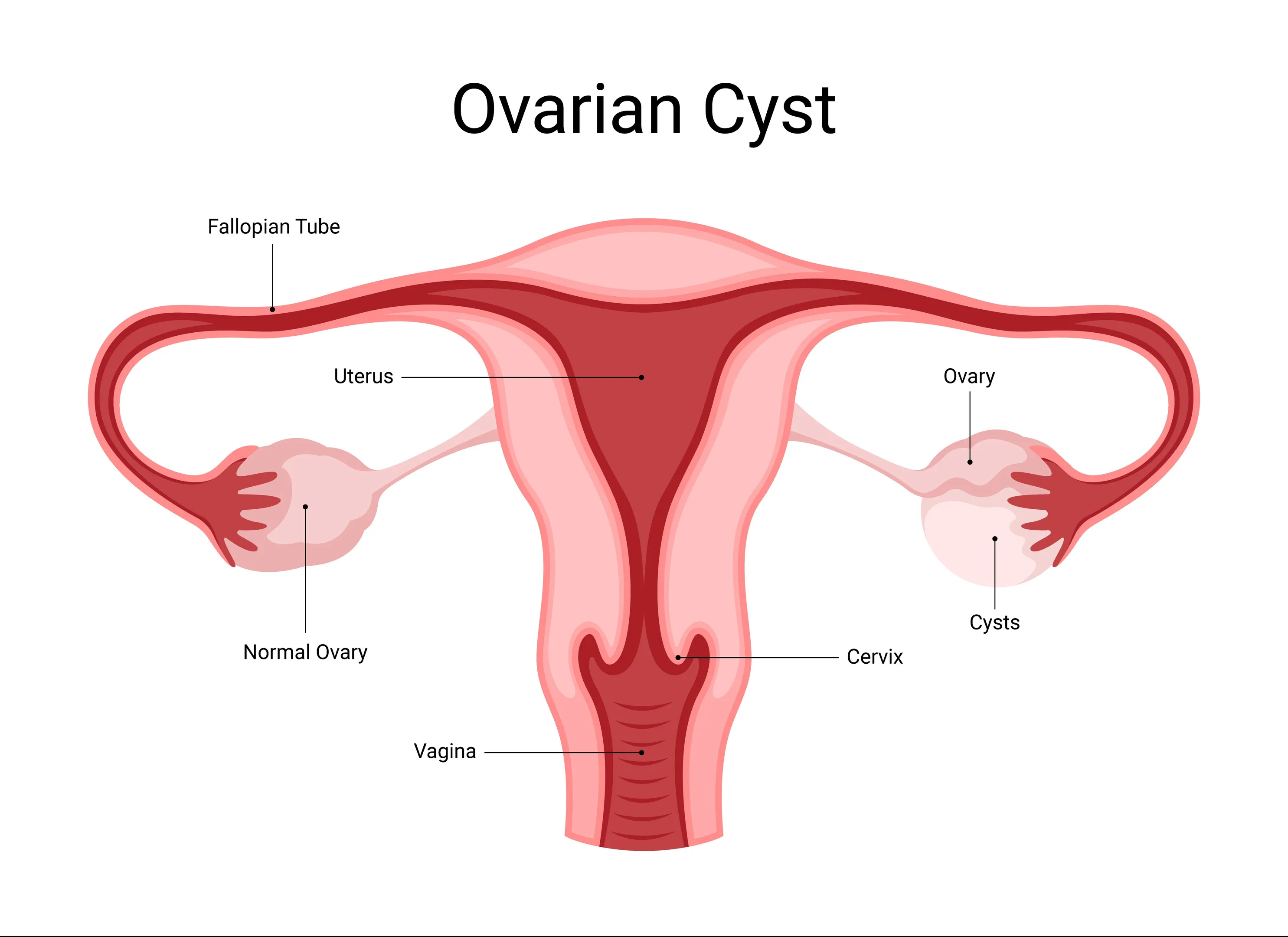
Finding an ovarian cyst on an ultrasound can create immediate anxiety, particularly when the report includes measurements or unfamiliar medical terminology.
However, ovarian cysts are not all the same. Ovarian Cyst Treatment depends on the type and appearance of the cyst, its size, associated symptoms, age, reproductive stage, and other clinical factors.
Does Every Ovarian Cyst Need Surgery?
No.
Some ovarian cysts may be related to normal ovarian function and can resolve over time. Others require follow-up imaging, medical evaluation, or surgical management depending on their characteristics.
The ultrasound appearance is therefore important.
Doctors may consider whether a cyst appears simple or complex, whether it has changed over time, and whether symptoms are present.
Symptoms That Deserve Evaluation
Ovarian cysts can sometimes be discovered incidentally during imaging performed for another reason.
When symptoms do occur, they may include:
- Pelvic pain
- Lower abdominal discomfort
- Bloating or pressure
- Menstrual changes
- Pain associated with certain activities
- Urinary or bowel pressure symptoms in some cases
Sudden or severe pelvic pain, particularly when accompanied by other significant symptoms, requires timely medical assessment.
What Determines the Treatment Plan?
Appropriate Ovarian Cyst Treatment is based on more than cyst diameter.
Evaluation may consider:
- Patient age
- Menstrual and reproductive status
- Symptoms
- Ultrasound characteristics
- Changes on follow-up imaging
- Relevant blood investigations where indicated
- Pregnancy plans
- Previous gynecological history
A small cyst with concerning characteristics and a larger cyst with reassuring characteristics may require different clinical approaches. Size alone does not tell the entire story.
When Might Surgery Be Discussed?
Surgery may be considered when a cyst has particular characteristics, persists or changes, causes significant symptoms, creates concern for complications, or requires further diagnostic evaluation.
Where surgery is appropriate, the doctor can discuss whether minimally invasive treatment is suitable.
The surgical objective may also take reproductive plans into account where clinically possible.
Dr. Neha Singhania evaluates ovarian and other gynecological concerns for women in Sanpada, using symptoms, examination findings and appropriate imaging to guide management decisions.
What to Bring to Your Appointment
If an ovarian cyst has already been detected, bring the complete ultrasound report and images when available.
Previous scans are especially valuable because they allow comparison over time.
Also provide details about menstrual cycles, pain patterns, medications, previous surgeries, pregnancies, and fertility plans.
Women seeking Ovarian Cyst Treatment in Sanpada should avoid assuming that every cyst requires immediate surgery or that every cyst can simply be ignored.
The appropriate next step is a structured gynecological assessment. Understanding what type of cyst is present, whether it is causing symptoms, and how it behaves over time helps determine whether observation, additional evaluation, or treatment is appropriate.
Keywords