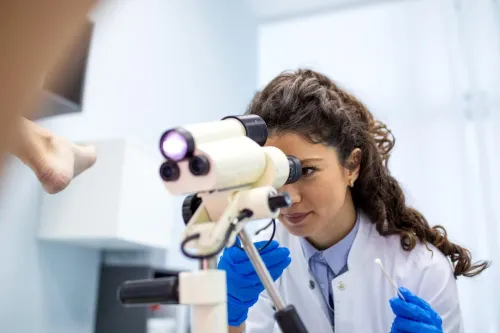
When pregnancy does not occur as expected, couples often feel pressure to move quickly toward treatment. Yet fertility care is most useful when it begins with systematic evaluation. Female infertility treatment should be based on the factors affecting conception rather than starting medication or procedures without establishing a clinical direction.
For women in Vashi, fertility assessment may be considered based on age, duration of trying to conceive, menstrual history, previous pregnancies, and known reproductive health conditions.
Fertility Assessment Is More Than One Test
Female fertility depends on several interconnected factors.
Evaluation may look at:
- Ovulation and menstrual regularity
- Ovarian reserve when clinically relevant
- Uterine structure
- Fallopian tube factors
- Endometriosis
- PCOS
- Previous pelvic infections
- Previous reproductive surgery
- Age-related fertility changes
Male-factor fertility issues are also important. This is why evaluation of a couple may be more informative than focusing exclusively on the woman.
Menstrual History Provides Useful Clues
Regular cycles can provide information about ovulation, although they do not answer every fertility question.
Very irregular periods, long gaps between cycles, absent periods, or symptoms suggestive of PCOS can indicate that ovulation requires assessment.
Painful periods, pain during intercourse, or chronic pelvic discomfort may raise questions about endometriosis or other pelvic conditions.
Previous ectopic pregnancy, pelvic infection, or pelvic surgery can also be relevant to fertility planning.
Age Changes the Evaluation Timeline
Female fertility changes with age, making age an important part of decisions about when to investigate and how quickly to proceed.
The appropriate timing of an infertility evaluation is therefore not identical for every couple.
Women with irregular or absent periods, known reproductive conditions, previous fertility problems, or other relevant medical concerns may be advised to seek assessment earlier rather than simply waiting for a fixed period.
Treatment Depends on the Identified Problem
Fertility treatment is not a single procedure.
Depending on assessment findings, management may involve cycle tracking, treatment of ovulatory problems, management of PCOS or endometriosis, correction of selected uterine abnormalities, counselling about timed intercourse, or assisted reproductive approaches where indicated.
Some couples may be counselled about IUI, while others may require discussion of different fertility pathways.
A useful plan explains why a treatment is being recommended and what clinical problem it is intended to address.
Questions to Ask Before Beginning Treatment
Before proceeding, patients can ask which factors have been evaluated, whether additional tests are needed, what the proposed treatment is expected to accomplish, and how long a particular approach should reasonably be continued before reassessment.
Dr. Neha Singhania provides gynaecological and reproductive health consultations in Vashi. Women seeking fertility evaluation can discuss menstrual patterns, previous medical history, reproductive goals, and appropriate investigations before deciding on treatment.
A structured evaluation cannot guarantee a particular fertility outcome, but it can prevent treatment from becoming a sequence of disconnected interventions without a clear clinical rationale.
Keywords