Vaginal bleeding after menopause is a symptom that deserves medical attention, even when it occurs only once or appears as light spotting. Although several noncancerous conditions can cause bleeding after menopause, it may occasionally indicate an abnormality involving the uterine lining or cervix. Dr. Neha Singhania, a Consultant Obstetrician and Gynaecologist, provides evaluation and treatment guidance for postmenopausal bleeding in Vashi, Navi Mumbai. Through careful assessment and appropriate investigations, she helps women understand the possible causes of bleeding and make informed decisions about their gynecological health.
Understanding Postmenopausal Bleeding
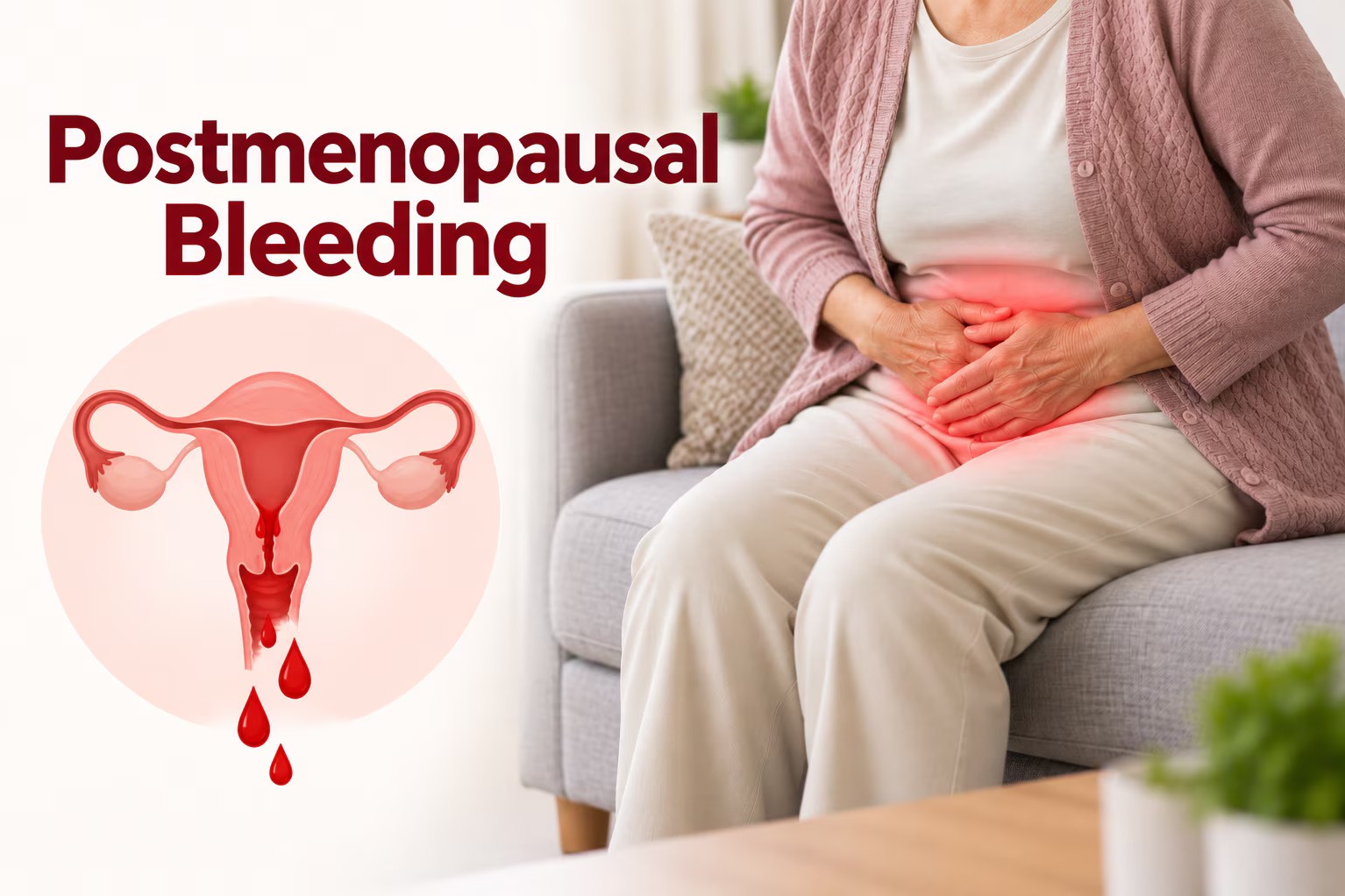
Postmenopausal bleeding refers to vaginal bleeding that occurs after 12 consecutive months without menstruation. It may appear as fresh bleeding, light spotting, or brownish discharge. Because the underlying causes vary, medical evaluation is recommended regardless of the amount of bleeding.
Common causes of postmenopausal bleeding include:
- Endometrial Atrophy: Reduced estrogen levels may cause the uterine lining to become thin and fragile, resulting in occasional bleeding.
- Vaginal Atrophy: Menopausal changes can lead to vaginal dryness and irritation, sometimes causing spotting after intercourse.
- Endometrial Polyps: These growths develop within the uterine cavity and may produce intermittent or unexpected bleeding.
- Endometrial Hyperplasia: Abnormal thickening of the uterine lining can cause bleeding and may sometimes involve precancerous changes.
- Gynecological Cancer: Postmenopausal bleeding can occasionally be an early symptom of endometrial or cervical cancer, making timely investigation important.
Our Approach to Postmenopausal Bleeding Treatment
Dr. Neha Singhania focuses on identifying the source of bleeding before recommending treatment. The choice of investigations depends on the patient's medical history, symptoms, and examination findings.
- Detailed Medical History: Reviewing menopausal history, bleeding patterns, medications, hormone therapy, and associated symptoms.
- Gynecological Examination: Assessing the vagina and cervix for visible abnormalities, irritation, or other possible sources of bleeding.
- Transvaginal Ultrasound: Examining the thickness and appearance of the uterine lining and identifying possible structural changes.
- Endometrial Investigation: An endometrial biopsy or hysteroscopy may be recommended when further assessment of the uterine cavity is necessary.
- Diagnosis-Based Treatment: Management may include medication, treatment of vaginal atrophy, polyp removal, or referral for specialized care when required.
- Follow-Up Assessment: Persistent or recurring bleeding is reviewed carefully, even when earlier investigations have been reassuring.
Schedule Your Consultation for Postmenopausal Bleeding Treatment
If you experience spotting, blood-stained discharge, or vaginal bleeding after menopause, arrange a consultation with Dr. Neha Singhania for postmenopausal bleeding treatment in Vashi.
Bleeding after menopause should not be assumed to be a routine hormonal change without proper evaluation. Identifying the underlying cause can help determine whether monitoring, medication, or further treatment is needed.
Keywords